
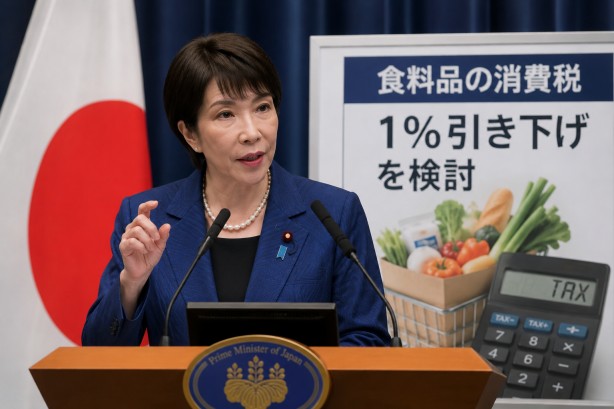
Japanese Prime Minister Sanae Takaichi is poised to direct the ruling Liberal Democratic Party to advance a proposal aimed at slashing the consumption tax on food items from 8% to 1% for a period of two years, beginning in April 2027. This move comes after stalled discussions on tax reform across party lines, with both the government and the ruling coalition advocating for the temporary tax reduction. This initiative is part of a broader strategy that includes providing financial aid to low- and middle-income households to alleviate the cost-of-living pressures.
The proposal, which is anticipated to involve approximately ¥600 billion in financial support, seeks to address the economic challenges faced by consumers. By significantly lowering the consumption tax on food, the government hopes to offer immediate relief to citizens grappling with rising expenses. The proposed measures underscore the administration’s commitment to easing the financial burden on households during these economically challenging times.
In order to ensure the timely implementation of this tax cut, the government plans to finalize the policy by early August. Following this, the necessary legislation will be introduced during an extraordinary parliamentary session slated for later in the year. This legislative timeline is crucial to meet the target of enacting the changes by the upcoming April, allowing sufficient time for the logistical and administrative adjustments required for the rollout.
While the proposed tax cut is temporary, it represents a significant shift in fiscal policy designed to support consumers. The emphasis on providing cash assistance alongside the tax reduction highlights a dual approach aimed at offering immediate financial relief to those most in need. As the government takes these steps, the focus remains on fostering economic stability and easing the strain on household budgets through thoughtful and targeted interventions.