
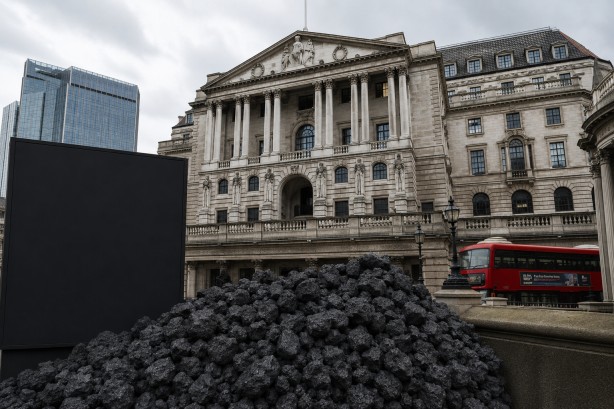
In a decisive move to tackle climate-related financial risks, the Bank of England has declared it will cease accepting bonds associated with thermal coal companies as collateral for its lending operations starting this October. This policy change highlights the central bank’s commitment to addressing the financial implications of climate change.
Commercial banks, including prominent financial institutions, typically use bonds as collateral when borrowing from the central bank to facilitate their routine operations and settle transactions. However, under this new regulation, bonds tied to thermal coal—the fossil fuel predominantly used in electricity generation—will no longer qualify for such purposes.
The central bank explained that companies involved in the thermal coal industry are increasingly vulnerable to financial risks as nations expedite their shift toward cleaner energy sources and aim for net-zero emissions. Consequently, assets tied to coal are at risk of depreciating over time. To further safeguard its financial standing, the Bank of England will also have the flexibility to apply discounts to bonds from other sectors deemed susceptible to climate risks.
Environmental advocates have applauded this decision, viewing it as a powerful message to financial markets that could prompt commercial banks to minimize their investments in highly polluting industries. Currently, over 150 major financial institutions globally have already implemented restrictions on business activities linked to the thermal coal sector.
While analysts recognize the policy’s potential impact, they caution that its success will largely depend on the criteria used to assess climate risks and whether analogous measures will be extended to other environmentally detrimental activities in the future.