
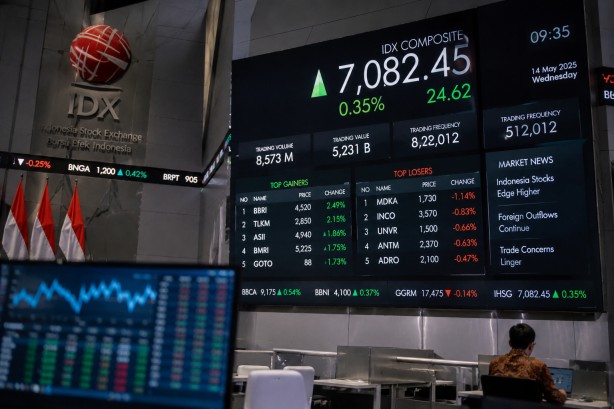
Indonesia’s stock market showed a modest increase last week, with the Jakarta Composite Index (JCI) climbing 0.34% by the end of July 24. Despite the market’s uptick, foreign investors continued to withdraw funds against a backdrop of global economic unpredictability. The market’s momentum was attributed to a boost in trading activities, even as the nation faced external pressures.
The Indonesia Stock Exchange reported a rise in its market capitalization to Rp 10,870 trillion. Meanwhile, the average daily trading turnover saw a significant jump of 41%, reaching Rp 19.76 trillion. Despite these positive indicators, foreign investors have remained cautious, resulting in net sales and total outflows amounting to Rp 79.09 trillion for the year to date. This cautious approach reflects investor sentiment regarding the stability of Indonesian assets.
Global issues have also played a role in shaping market sentiment. The increase in global oil prices, spurred by escalating tensions in the Middle East, has contributed to investor apprehension. Additionally, new U.S. tariffs on imports from several countries, including a 10% tariff on specific Indonesian goods, have added to the economic uncertainty facing Indonesia.
In response to these developments, Indonesia’s Finance Ministry has acknowledged the potential impact of rising oil prices on the country’s 2026 state budget. Nevertheless, the ministry asserts that Indonesia’s overall fiscal position remains stable, suggesting resilience in the face of these global challenges.